Splitwise
3 free expenses a day. Friends need accounts.
A phone app for my own UK trip, designed and built with Claude Code.
Personal project, outside Scaler. Screens show a demo trip.
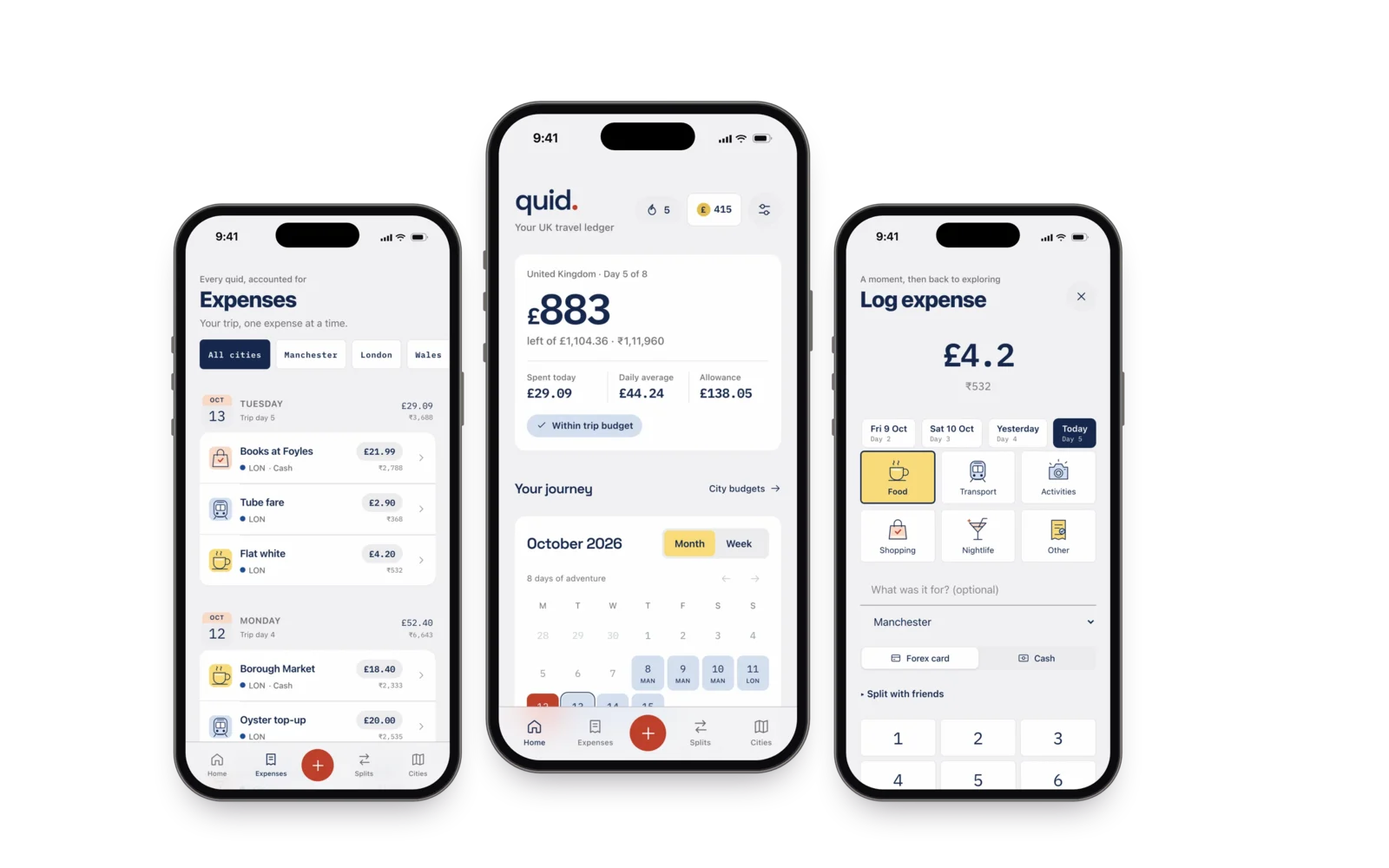
Journal, ledger and log. Every amount in pounds carries its rupee cost under it.
Friends put me up, so there were no rooms to pay for. The whole budget went on the trip itself: trains, coffee, museums, meals out and the odd night out.
What it meantQuid tracks the trip by what I did, in six categories, with no line for lodging.
Everything ran from my phone, on a SIM bought for the trip. Data came and went, and some of the trip was spent underground, in Manchester tram tunnels and on the Tube.
What it meantAn app installed from a link, that saves every spend to the phone first and syncs when there is signal.
I set the budget at home, in rupees, because that is how I judge what something costs. Every price in the UK would be in pounds.
What it meantEvery pound shows its rupee cost as you type it, and under every total after that.
Most apps give you a number. I wanted an answer: am I on track?
3 free expenses a day. Friends need accounts.
No rupees, no city budgets, no “on track”.
iOS only. No splits, no sync.
Built for company travel.
Five gaps were left. Quid fills each one.
Spec first: the gaps, the flows, every screen. Then built with Claude Code, on Next.js, Postgres and the phone’s own database.
Wrote a spec first, starting from what Splitwise and TravelSpend got wrong.
Built the working app in a week, before the trip.
Wrote a token doc, then audited it against the live build.
Redesigned the same screens six times, four of them in one day.
Code made redesigns cheap. The home screen went through six versions, four in one day.
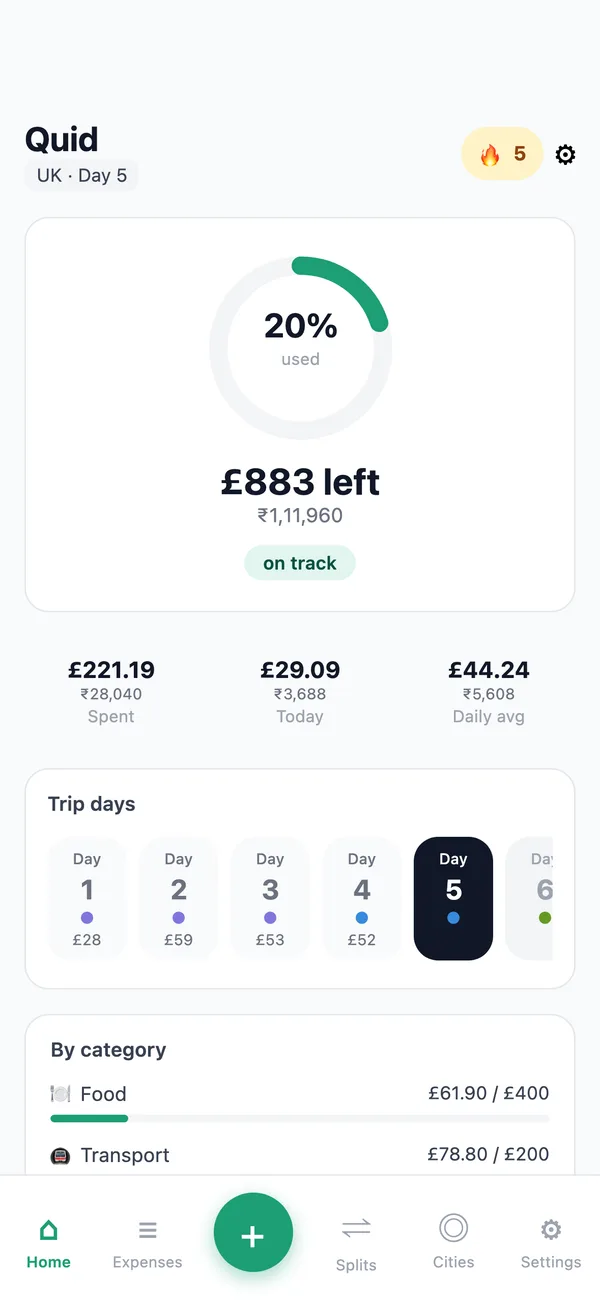
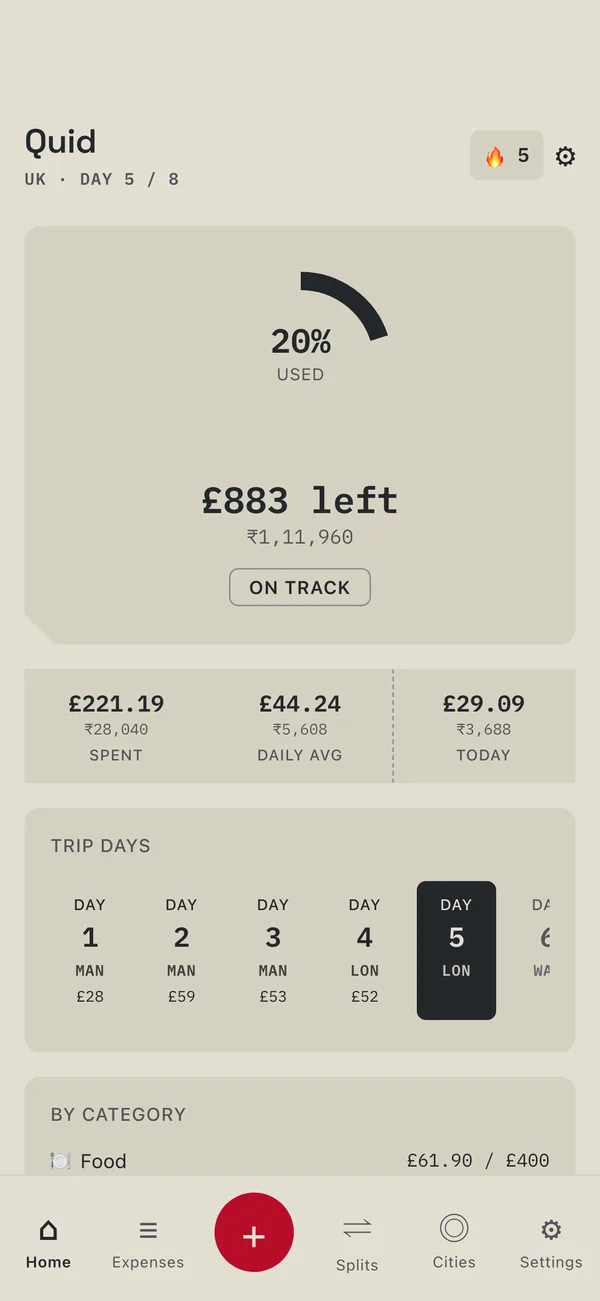
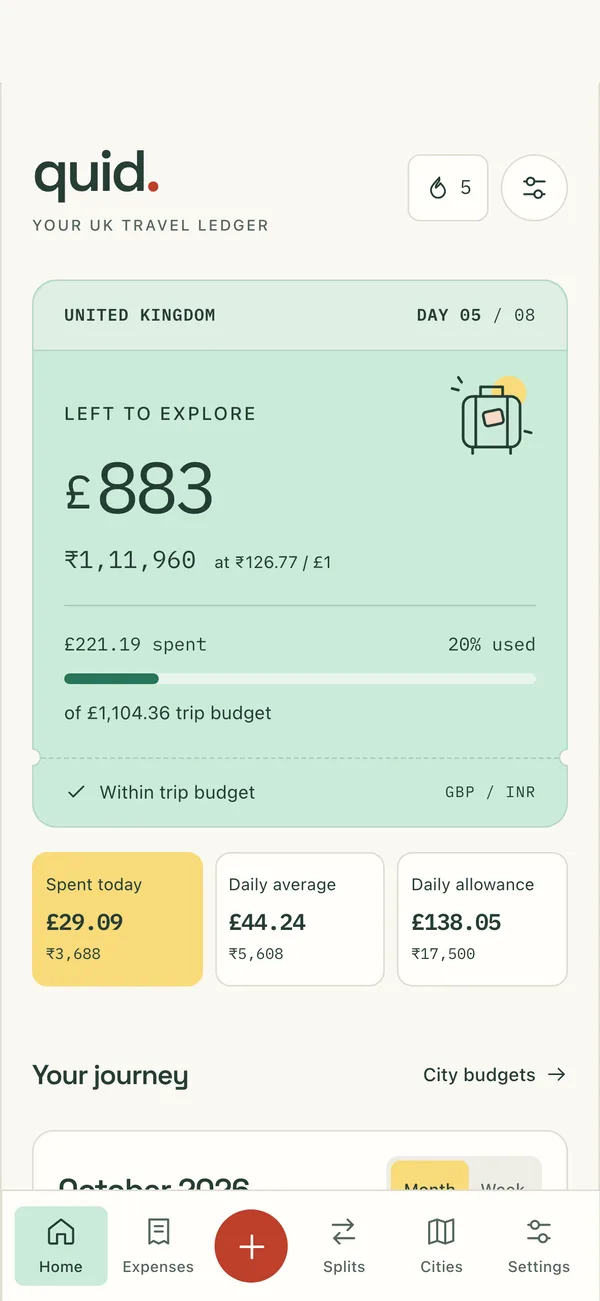
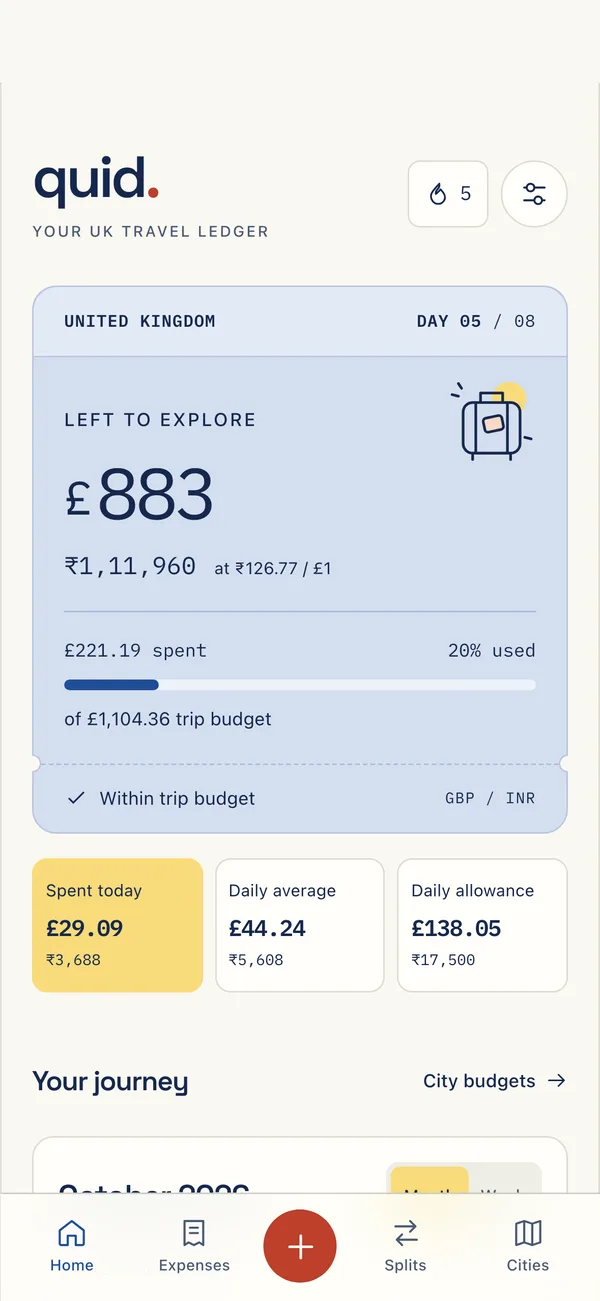
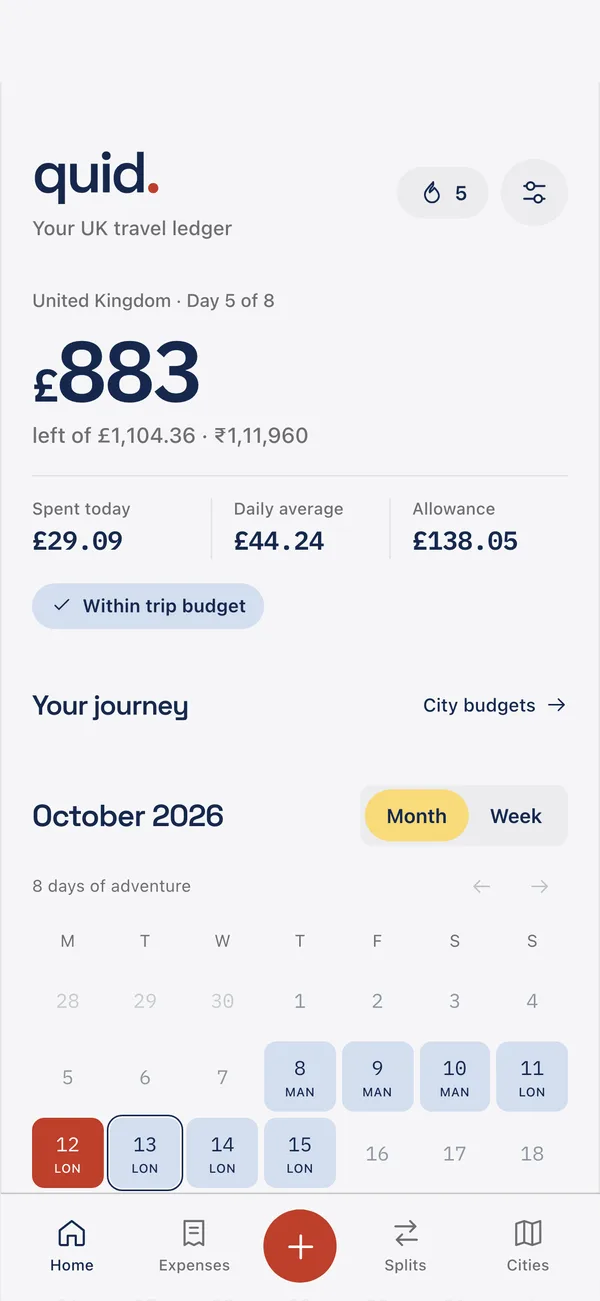
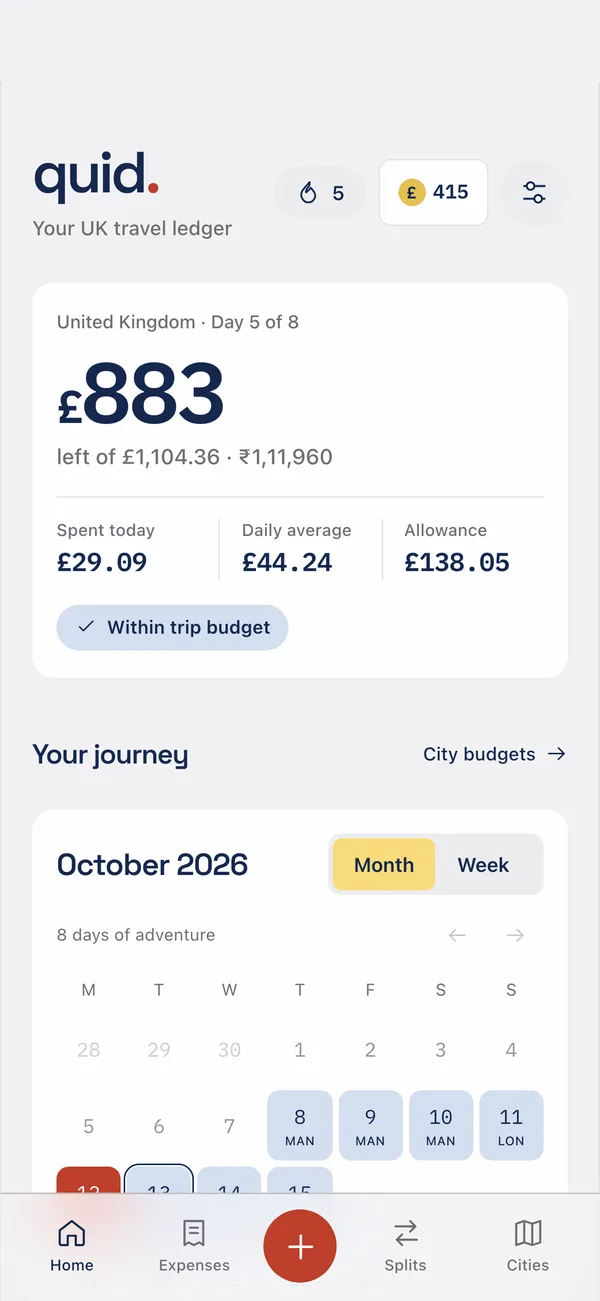
Versions three to five landed on the same day. Version five cut too far, and the next commit put cards back as quiet groups.
My token doc said the red button passed contrast. Measured against the build, it was 4.42:1, under the 4.5:1 floor. Docs get checked against the code now.
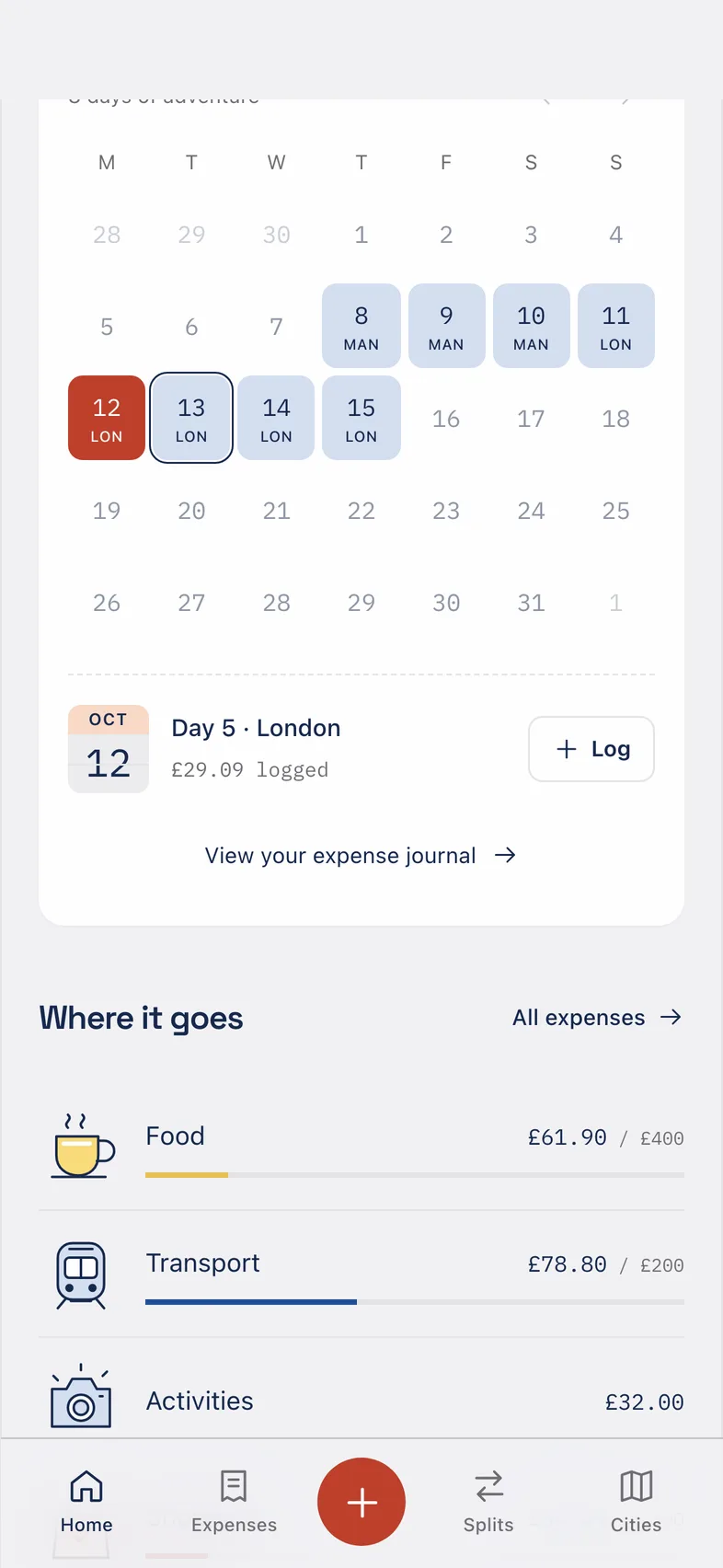
The journey calendar. City codes come from the same data enum the token doc names.
Every feature is built for one moment: paying, at a till, often underground.
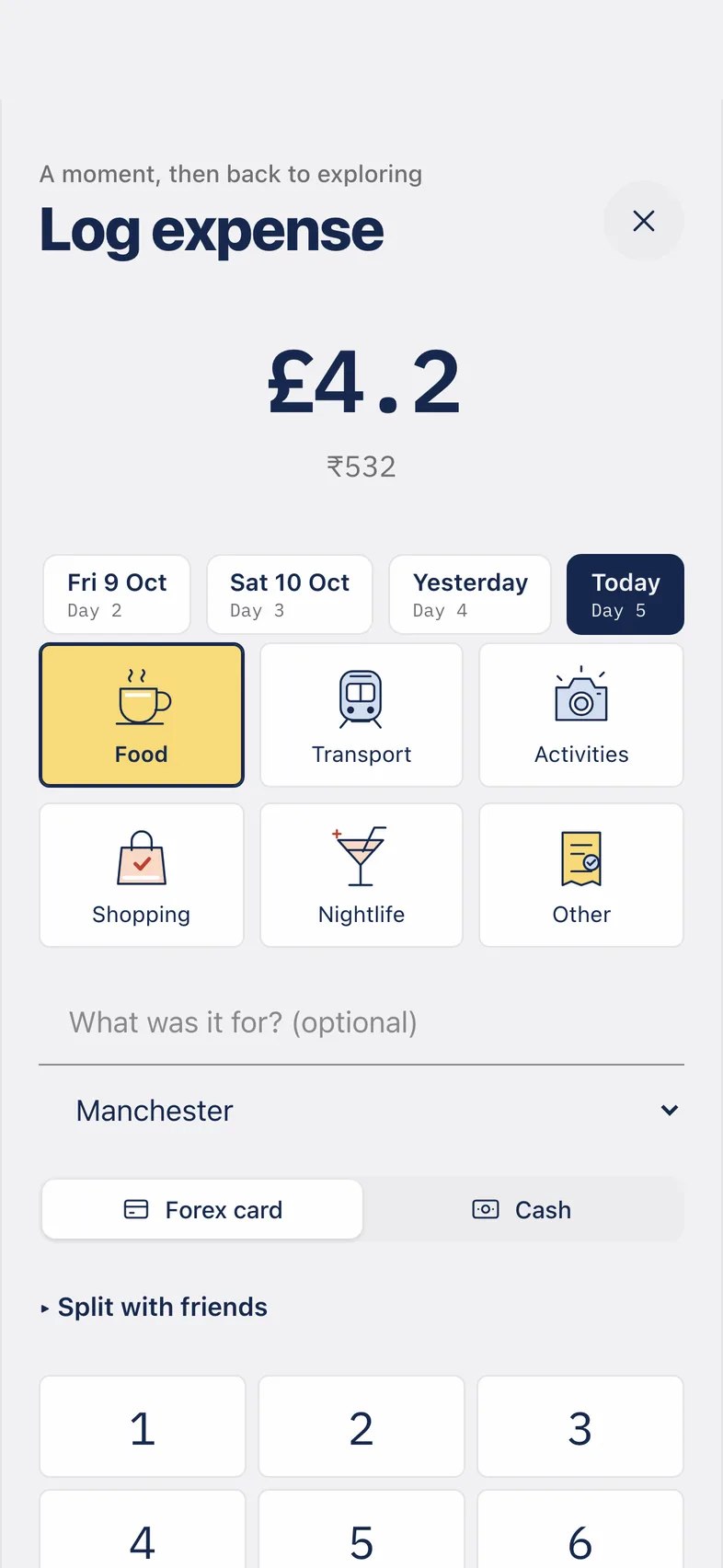
The rupee cost sits under the pound amount as you type, and under every total after.
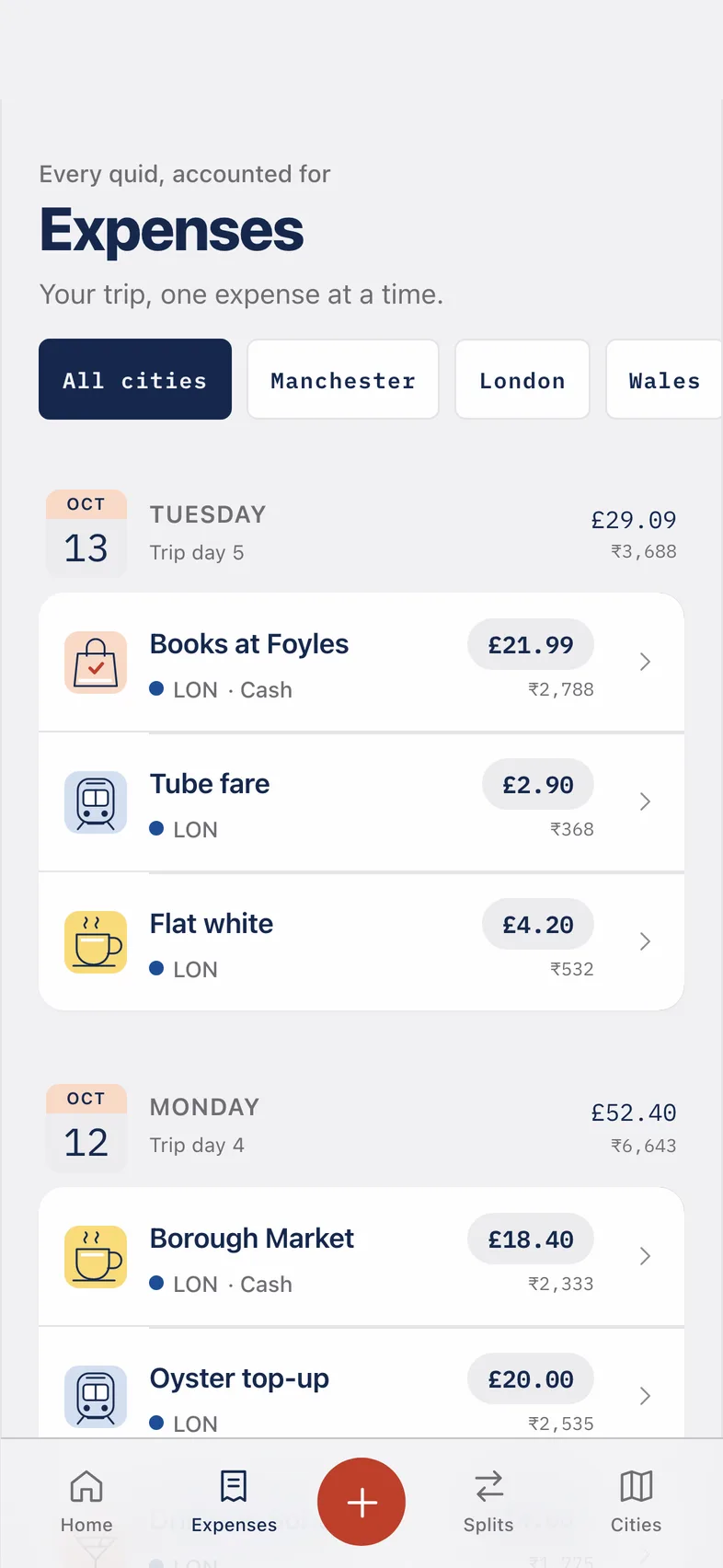
Spends save to the phone first and sync when there is signal. Early builds only synced up, so a new phone showed £0; two-way sync fixed it.
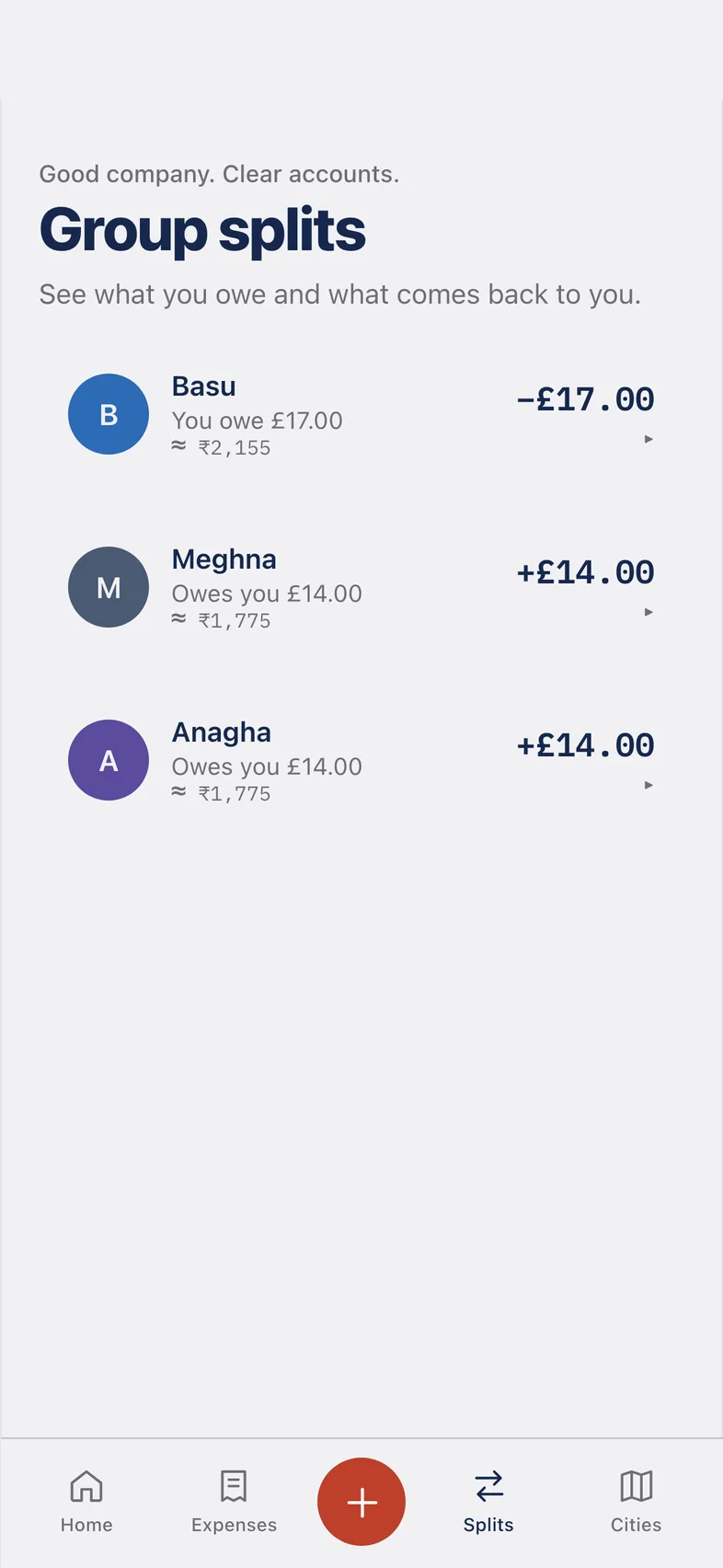
Friends are just an initial and a colour. Only my share counts against my budget.
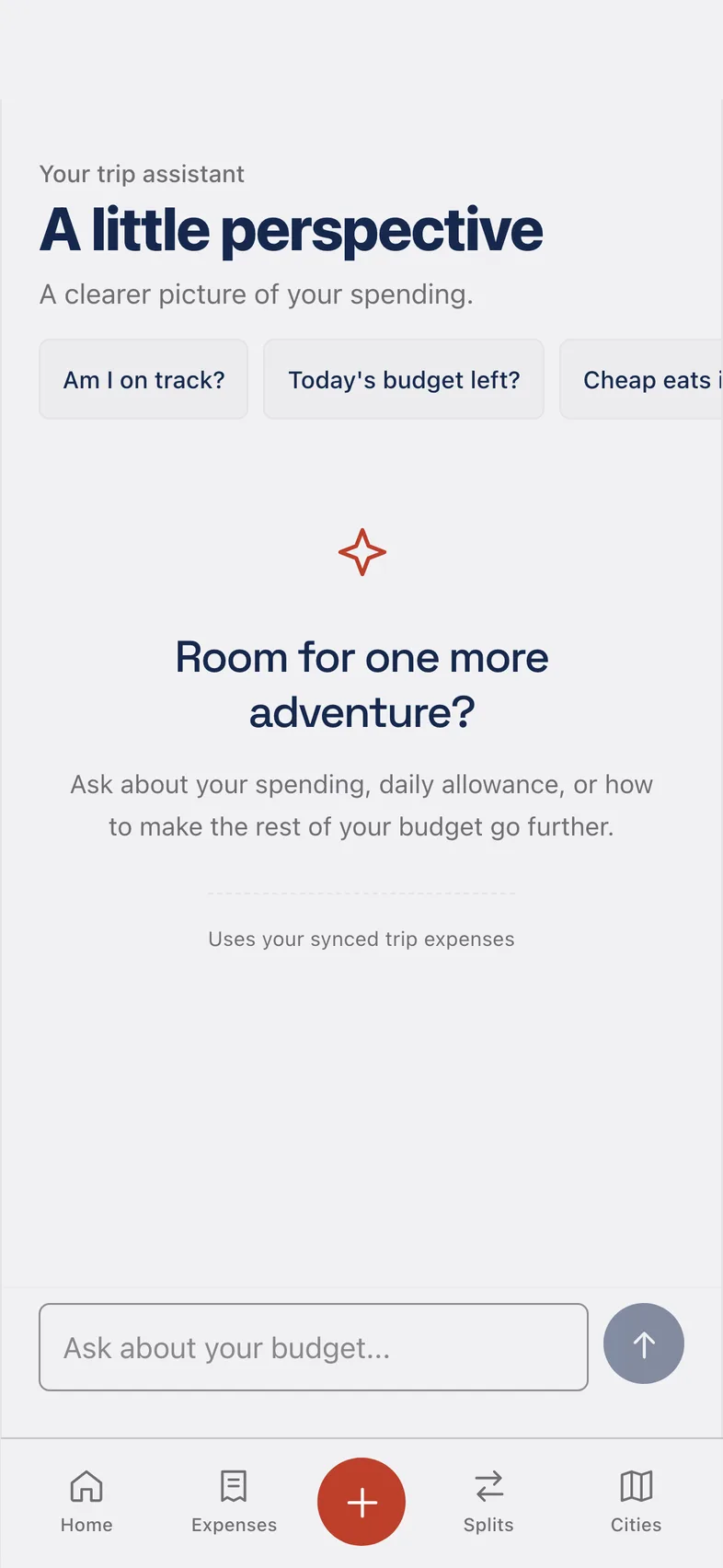
It answers “Am I on track?” from my real spending and days left. The model moved from Claude to Gemini to Groq, for a free tier that lasted the trip.
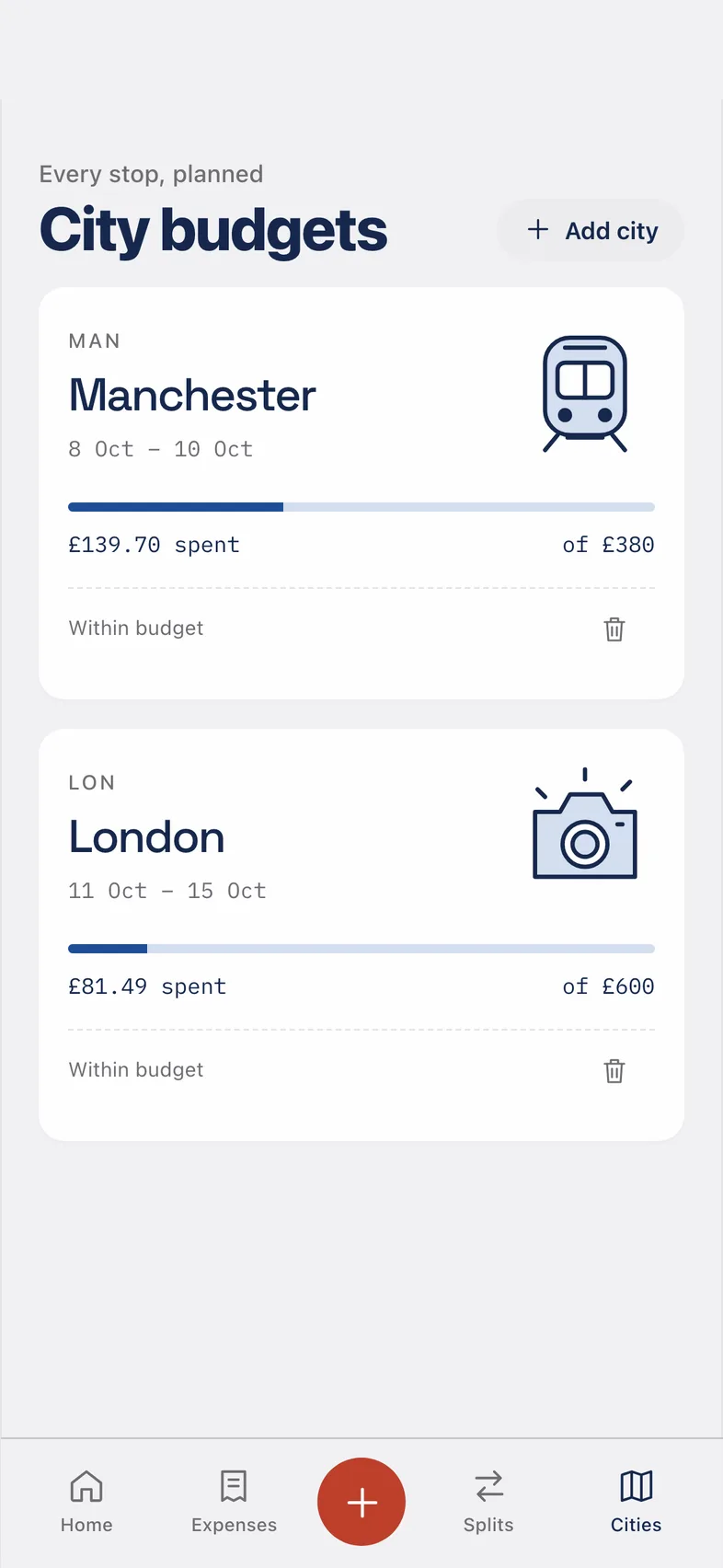
Each city gets its own budget and dates, so cheaper Manchester is not judged against London.
Can one person design and ship a full app with no team?
Yes, for one user. Logging, sync, splits, city budgets and an assistant, live on Railway.
What does a design system look like when the code is the canvas?
Faster to change than to argue about. Six looks, each tested on a phone with real data.
Where does offline-first stop being simple?
At the second device. Saving locally was easy. Getting the data back onto a new phone took a second pass.
Does it hold up for anyone but me?
Unknown. There is one trip, one budget and no accounts. More travellers would need each of those first.